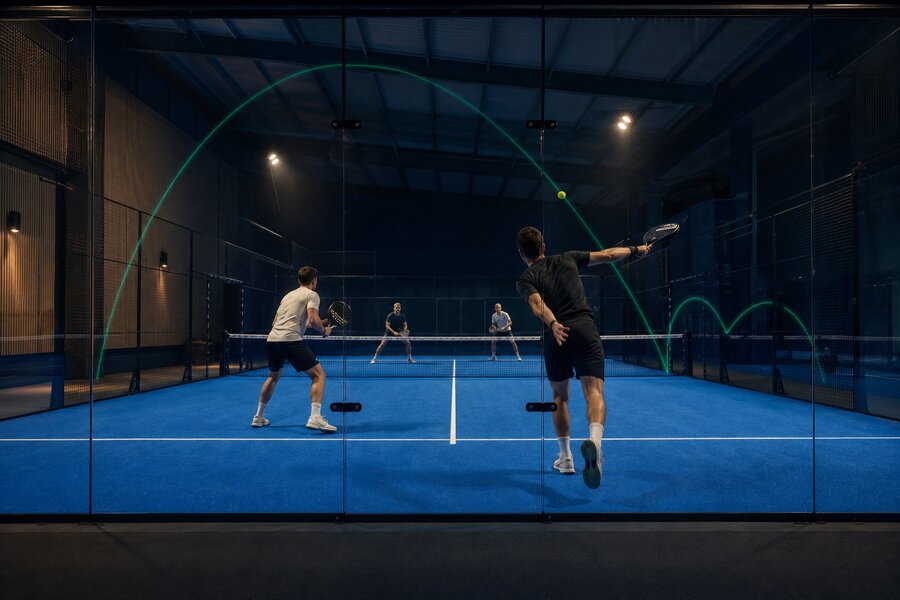
Padel has done something no racket sport has managed in Britain for decades: it has grown faster than anyone planned for. Courts have gone up behind leisure centres, inside old warehouses and on the edges of tennis clubs that until recently had never heard of a bandeja.
The sport's appeal is obvious once you have played it. The court is enclosed, the serve is underarm, the walls keep the ball alive, and rallies last long enough that a complete beginner gets to hit the ball rather than retrieve it. It is sociable, it is doubles by default, and it is genuinely fun within about ten minutes of picking up a racket.
But the growth has outrun the coaching, and that creates a specific problem for anyone who wants to get past the beginner plateau.
The Coaching Gap is Real and Growing
When a sport grows this fast, courts arrive before coaches do. Building a padel court takes months. Producing a coach who genuinely understands padel — rather than a tennis coach gamely adapting — takes years.
So most British padel players are in an unusual position. They play regularly, often weekly, sometimes more. They improve quickly at first, because the sport rewards basic competence. And then they stop improving, because nobody has ever told them what they are doing wrong.
The plateau has a signature, and it is always the same. Players arrive at a decent level off the ground, and then get stuck on the overheads — the shots that separate a padel player from a tennis player who happens to be on a padel court.
Why Padel Punishes Tennis Instincts
Every cross over Tennis player will say the same thing.
In tennis, a short high ball is an invitation. You smash it, and the point ends. In padel, smashing that same ball is frequently the worst available option: it comes off the back wall, your opponents are waiting, and you have handed them the net position you just spent three shots building.
Padel's answer is a family of controlled overheads that have no real tennis equivalent. The bandeja is a defensive overhead played with a sliced, flattish action to keep you at the net while sending the ball deep. The víbora is its aggressive cousin, hit with more side-spin and bite. Both are played with a motion that would look wrong in tennis and is exactly right in padel.
These shots are learned, not inherited. And they are precisely the shots a casual player never gets corrected on, because correcting them requires someone who knows what a good bandeja looks like.
What OnCourtAI Actually Analyses for Padel
OnCourtAI analyses nine padel strokes: serve, forehand, backhand, volley, lob, bandeja, víbora, smash and chiquita. For comparison, the tennis side of the platform analyses four. Padel gets more than double the stroke coverage, because padel genuinely has more distinct shots that need separate treatment.
Crucially, these are not tennis analyses with padel labels stuck on top. A bandeja scored against a tennis smash template would fail on every measure that matters — the contact height is lower, the swing is flatter, the follow-through is shorter, and the whole point of the shot is control rather than power. The padel strokes are scored against padel checkpoints, built with input from coaches who play the sport.
You film a few shots on a phone. The system finds the individual strokes in the video, tracks your body position frame by frame, and scores the technique components — preparation, contact point, balance, kinetic chain, follow-through and the rest — out of 100 each.
The Honest State of the Padel Data
We publish our numbers rather than rounding them up, so here is where padel sits on the platform.
The analysis engine covers all nine strokes and has done since launch. The padel player base is still small — a few dozen analyses across a few dozen players — compared with the tennis side, which has now processed 2,602 analyses from 891 players across 93 countries, covering 16,872 individual shots.
What that means practically: the per-stroke feedback works and is built on real padel biomechanics, but padel-specific population benchmarks are thinner than the tennis ones. We would rather say that plainly than imply a depth of comparison data we do not yet have.
If you are one of the early padel players on the platform, your feedback on your own technique is solid. The leaderboards get more meaningful as more padel players join.
What to Film First
If you play padel and want to know where your game is leaking points, film these in order:
The bandeja, first and always. It is the shot that decides whether you can hold the net, and it is the shot most self-taught players execute as a half-hearted smash. If you film one thing, film this.
Your serve. Underarm and apparently simple, which is exactly why nobody works on it. A padel serve that sits up invites an immediate attack on the return.
Your volley. You will play more volleys in padel than any other shot. Small technical faults get multiplied by sheer repetition.
The lob. The most underrated shot in padel and the one that wins matches at club level. A good lob takes the net away from the other pair and resets the whole point.
Filming Padel Is Slightly Harder
Padel's glass walls and enclosed court make filming fiddlier than tennis. Two practical points.
Film through the fence rather than the glass where you can. Glass reflections confuse pose tracking far more than mesh does. If you must shoot through glass, avoid having bright sky or floodlights directly behind you.
Keep your whole body in frame for the entire swing, including your feet. Padel's enclosed courts tempt people to film from very close, which crops the legs — and since several technique components depend on knee bend and weight transfer, cropping the legs costs you the most interesting half of the feedback. Our guide on filming for AI analysis applies to padel with those two adjustments.
Why This Matters for a Growing Sport
The risk for British padel is not that people stop playing. It is that people hit the plateau, decide they have "got as good as they are going to get", and drift to playing socially rather than improving.
That happens when feedback is unavailable, not when ability runs out. Most club padel players have never had a single technical observation about their bandeja, and they are not going to get one from the other three people on court, who are all guessing too.
Measurement does not replace a good padel coach, and where you can find one you should use them. But for the large number of players who cannot, being told that your contact point is too low and your balance is leaking at 52 out of 100 is a great deal better than wondering.
You can read more about how the padel analysis works on our padel AI analysis page, or start with the complete guide to padel if the sport is new to you.